
Cigarillos look simple. A small tobacco product, lit at one end, smoked at the other. The finished object hides a long process. Months of growing, weeks of curing, careful blending, and skilled hands or machinery at the very end. The whole thing has more steps than most people guess.
If you smoke them and have ever wondered what is actually behind the pack you just opened, this is a clear walk through how cigarillos are made. From leaf to finished cigarillo, with a real look at what separates a quality product from an average one.
What a Cigarillo Actually Is
Before getting into production, it helps to be clear about the format. A cigarillo is a small tobacco product made from real tobacco filler wrapped in either a tobacco leaf or a tobacco-based wrapper. It is not a cigarette. It does not use processed paper. It is closer to a small cigar in everything except size and burn time.
A typical cigarillo runs around three to four inches long. It can be filtered or unfiltered. It can be hand-rolled or machine-rolled. The defining trait is the use of real tobacco end to end, including the wrapper.
Step 1: Growing the Tobacco
Every cigarillo starts in a field. The leaves used in finished cigarillos come from tobacco plants grown in regions with the right climate, soil, and rainfall. Brazil is one of the most respected modern tobacco-growing countries. Its southern regions produce leaf used in premium cigar and cigarillo blends around the world.
The varieties most relevant to cigarillo production are Virginia, Burley, and Oriental. Virginia originated in the American South and brings natural sweetness. Burley took shape in Kentucky and brings body and fuller character. Oriental gets its name from the eastern Mediterranean and brings aroma. Today all three varieties are grown around the world, including in Brazil.
When these three are blended together, the result is called an American Blend. American Blend is the foundation of a huge portion of the cigarillo market.
Step 2: Curing the Leaf
Fresh tobacco leaves are not ready to be used. They are green, grassy, and chemically far away from what a cigarillo needs. The leaves go through curing, which is the controlled drying process that builds the flavor most smokers recognize as tobacco.
Flue-curing uses heat from external pipes to dry the leaves quickly while locking in sugars. Air-curing happens in open barns over weeks or months and produces a fuller, drier leaf. Sun-curing uses natural sunlight and is closer to how Oriental varieties were traditionally finished.
After curing, the leaves are aged. Time mellows them. Sharp notes settle. Layered character builds. Premium operations age their tobacco longer than discount ones. That is one of the quiet differences in the finished product.
Step 3: Sorting and Grading
Once the leaf is cured and aged, it has to be sorted. Not every leaf is fit for every purpose. Some leaves are best for wrappers. Some are best for binders. Some are best for filler. The grading happens by hand at any operation that cares about quality.
Wrapper leaf has to be visually attractive. It needs to be intact, evenly colored, and supple enough to wrap around a finished cigarillo without cracking. This is the leaf the smoker actually sees, so its appearance matters.
Filler is the inside of the cigarillo. It does not need to be visually beautiful, but it does need to bring the flavor and burn characteristics the blend is built around. Filler is where most of the actual tobacco volume goes.
Step 4: Building the Blend
Every cigarillo line has a recipe. A blend specifies which varieties go into the filler, in what proportions, and what kind of wrapper finishes the product. A good blend is consistent. A great blend is also memorable.
Blending is a craft. The blender tastes early test runs, adjusts proportions, runs more tests, and only then locks the recipe in for production. The goal is balance. No single variety should overpower the others. The flavor should hit different notes from start to finish without falling flat in the middle.
Some lines are unflavored. Their flavor comes only from the leaf and the cure. Others are dipped in natural infusions like cognac or rum, which add aromatic depth on top of the tobacco itself. Both approaches are legitimate. They produce different kinds of products for different kinds of smokers.
Step 5: The Wrapper Decision
Cigarillos use one of two general wrapper types. The first is a natural tobacco leaf wrapper. This is a real leaf, sorted and prepared specifically for wrapping. It is the same kind of wrapper used on premium cigars. It costs more and takes more care to handle.
The second is a tobacco-based reconstituted wrapper. This is made by processing tobacco into a sheet that can be cut and applied with consistency. It is still tobacco. It is just produced in a controlled sheet rather than picked as a leaf. Some operations make these in-house with their own tobacco. The Al Capone Blues line uses a natural silky leaf wrapper produced in-house from American Blend tobacco.
Each wrapper type has its place. Natural leaf wrappers carry their own flavor and aroma into the cigarillo. In-house wrappers give a more even consistency that lets the filler do most of the talking.
Step 6: Rolling – Hand vs Machine
This is the step where cigarillos divide into two clear categories. Hand-rolled and machine-made. Both can produce good products. They are different traditions.
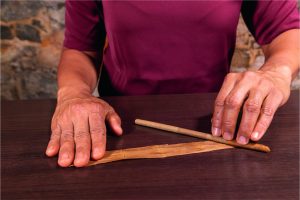
Hand-rolling is what cigar makers have done for centuries. A skilled roller takes the prepared filler, lays it correctly, applies the binder, and finishes with the wrapper. The whole thing is shaped by trained hands. Hand-rolled cigarillos carry the small variations that come with handcraft. They also carry the kind of quality that only attention can produce.
Al Capone Sweets and Al Capone Jamaican Blaze are both hand-rolled. Sweets uses a natural tobacco leaf wrapper and a cognac-dipped finish. Jamaican Blaze uses a natural tobacco leaf wrapper and a rum-dipped finish. Both lines run through trained roller teams.
Machine-made cigarillos are a different process. The Al Capone Blues line, for example, is not hand-rolled. It is produced through controlled mechanical rolling that uses a natural silky leaf wrapper made in-house from American Blend tobacco. The result is a flavor-forward, mellow cigarillo with the kind of consistency mechanical production can deliver.
Machine-made does not mean lower quality on its own. It means a different production approach. The quality lives in the leaf, the blend, and the build, regardless of whether human hands or precision machinery did the final rolling.
Step 7: Filtered or Unfiltered
Some cigarillos come with filters. Some come unfiltered. The filtered version uses a paper or cellulose filter at the mouth end. The unfiltered version is straight tobacco end to end, with the wrapper closed off cleanly.
Both formats are common. Filtered cigarillos are often easier for smokers coming from cigarettes. Unfiltered cigarillos are closer in feel to a small cigar. Most major cigarillo lines, including Al Capone Sweets, Jamaican Blaze, and Blues, are available in both filtered and unfiltered options.
Step 8: Finishing and Quality Control
Once the cigarillos are rolled, they go through finishing. Cutting to length. Visual inspection. Sometimes a final aging step in the finished form. The cigarillos that pass quality control are packed for distribution. The ones that fail are pulled.
Quality control is one of the unsung parts of cigarillo making. Pack consistency, burn quality, draw resistance, and visual finish all get checked. The best brands hold a tight standard. The discount end of the market tends to be looser.
Step 9: Packaging
The last step is the pack. Cigarillos are sealed in foil-lined or moisture-controlled packaging that protects them from drying out before they reach the smoker. The pack design itself, the labels, the foil, the wrapping, all play a role in keeping the product in proper condition from factory to retailer.
If you pick up a fresh pack of well-made cigarillos and unwrap it, the aroma should hit you immediately. That is the leaf doing its job. A pack that smells flat at first opening usually means something went wrong somewhere in the chain.
What Separates a Great Cigarillo from an Average One
After all those steps, what actually makes the difference? A few things. The quality of the original leaf. Whether the brand grows its own tobacco or buys leaf on the open market. How long the tobacco was aged. The blend recipe. Whether the rolling was done with care. Whether the finished product was inspected and held to a real standard.
Vertical operations have an advantage in all of these. Brands that grow, blend, and roll under the same roof have direct control of the chain. Brands that source from multiple suppliers and outsource production are reliant on every link being honest.
Al Capone is one of the brands that controls the full chain. The tobacco for the cigarillo lines is grown on their own farms in Brazil. The blends are built in-house. The Sweets and Jamaican Blaze lines are hand-rolled. The Blues line uses a natural silky leaf wrapper made in-house. The whole production is consolidated rather than scattered across third parties.
Hand-Rolled vs Machine-Made in the Smoker’s Hand
Once you understand how each is built, you can pick up the differences in the cigarillo itself. Hand-rolled cigarillos tend to have small variations from one stick to the next. Slight differences in pack, wrapper character, even the curve of the finish. Those variations are not flaws. They are signs that a person was involved.
Machine-made cigarillos run more uniform. Each stick in a pack looks like the others. The build is precise. For smokers who want predictability across a pack and a long-running flavor profile they can count on, that uniformity is the whole point.
Most cigarillo lineups offer at least one of each. The choice is preference, not hierarchy.

How to Tell a Well-Made Cigarillo by Feel
Once you know what goes into making a cigarillo, you can read the finished product more easily. A well-made cigarillo feels firm but not hard. The wrapper is intact, with no cracks or weak spots. The cap end is sealed cleanly. The aroma is alive when you bring the pack to your face.
When you light it, the burn line stays even. The draw is steady. The flavor matches what the blend is supposed to deliver. Halfway through, the cigarillo is still working as intended. That kind of consistency does not happen by accident. It is built across every step of the process described above.
What Flavored Cigarillos Actually Are
There is some confusion in the market about what flavored cigarillos are. Worth clearing up. The flavor on a quality flavored line is not painted on the wrapper after the fact. It comes from a real infusion process during production. The Sweets line, for example, gets its mellow sweetness from cognac. The Jamaican Blaze line gets its warmth from rum. These are real ingredients that interact with real tobacco.
Lower-end flavored products tend to take a different route, with lighter spray-on finishing and less attention to how the flavor sits with the leaf. The difference between a properly built flavored cigarillo and a cheap one is usually obvious at first light.
Why It Matters
Most smokers do not stop to think about how their cigarillos are made. They do not have to. But knowing the process changes how you read the products on a shelf. A pack of cigarillos is not just a pack. It is the result of a long chain of decisions made by farmers, graders, blenders, rollers, and inspectors. The brands that take all of those steps seriously produce a different cigarillo than the brands that cut corners.
The next time you open a pack, you will probably notice things you did not notice before. The aroma. The build. The burn. The flavor. None of it is accidental. All of it traces back to the process.
Where to Try a Well-Made Cigarillo
If you want to taste what a fully integrated production looks like in the finished pack, Al Capone is one of the easiest places to start. Browse the lineup through online retailers or find a local seller through the store locator. The pack you pick up was grown, blended, and rolled by the same operation. That kind of consistency shows up the moment you light it.
This content is intended for adult consumers 21 years of age or older. This article is informational in nature and does not constitute medical or health advice. Preferences vary depending on taste and experience.