

Rolling tobacco is one of those skills that looks effortless when someone who knows what they are doing demonstrates it, and genuinely frustrating when you are figuring it out for the first time on your own. The leaf tears. The fill is uneven. The draw is too tight or too loose. The whole thing comes undone somewhere in the middle and you are back at square one wondering what went wrong.
Most of those problems come down to a handful of specific habits and misunderstandings about the material, not a lack of natural ability. Once you understand how a quality tobacco leaf behaves, what it needs from you in terms of handling and moisture, and how to distribute your fill evenly before you start the roll, the technique clicks into place relatively quickly.
This guide covers everything from choosing the right leaf wrap to troubleshooting a roll that is not cooperating. It is written for adult smokers who are genuinely trying to get better at this, not for people looking for a thirty-second overview. Work through it in order the first time. After that, the individual sections make good reference material when a specific issue comes up.
Why Natural Tobacco Leaf Wraps Are Worth the Learning Curve
Before getting into technique, it is worth spending a moment on why natural leaf wraps have developed such a dedicated following among adult smokers who roll their own. The short answer is that the wrapper is not just a vessel for the fill. It is an active contributor to the flavor, aroma, and burn quality of everything you roll.
Paper wraps and synthetic alternatives are convenient. They are forgiving, consistent, and cheap. But they do not bring anything to the experience. The paper burns with its own character, which is largely neutral at best and distracting at worst, and there is no natural tobacco aroma coming off the wrap itself.
A natural tobacco leaf wrap burns slowly and evenly when the roll is properly constructed. The leaf itself contributes to the overall flavor profile of the smoke, adding a mellow, aromatic quality that paper simply cannot replicate. The experience of a well-rolled natural leaf is noticeably different from anything wrapped in processed alternatives, and that difference is what keeps experienced rollers coming back to the format even when it requires a little more attention.
The texture of the leaf also becomes something you develop a feel for over time. Good natural leaf has a silkiness to it, a certain pliability that lets it conform to the shape of the roll without fighting you. Once you learn to read that texture and work with it rather than against it, the process becomes considerably more intuitive.
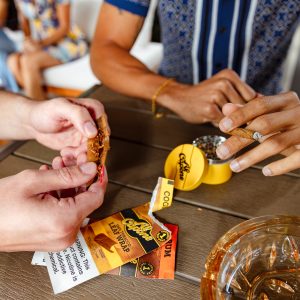
Understanding Your Leaf Before You Start Rolling
What Good Leaf Feels Like
A quality tobacco leaf wrap should feel soft and elastic when you handle it. It should have some give without being wet or limp. If it is brittle or cracks at the edges when you begin to unroll it, the leaf has dried out and will tear during the roll. If it feels overly damp or almost sticky, it may have too much moisture and will not seal properly or burn evenly.
The ideal condition is somewhere in the middle: pliable, slightly tacky on the inner surface, and flexible enough to wrap around fill without cracking along the central vein or at the edges. Quality leaf wraps that are packaged correctly, sealed individually to preserve moisture, should arrive in or very close to this condition.
The Three Varieties and How They Handle
Not all natural leaf wraps are the same, and the variety you are working with has a slight effect on how it handles during the roll. The differences are subtle once you have spent time with each, but worth knowing going in.
Original natural leaf wraps have the most neutral character and tend to be the most forgiving for newer rollers. There are no added flavors to distract from the tobacco itself, and the leaf is typically consistent in thickness and texture across the whole surface.
Cognac-variety wraps carry mellow, malty notes that come through in the aroma during the roll as well as in the finished smoke. The leaf handles similarly to the original but has a slight sweetness in the scent that some rollers find pleasant to work with.
Rum-variety wraps have a slightly fruity, aromatic quality that makes them popular for social settings. They tend to be slightly more fragrant during the rolling process, which is part of the appeal. The leaf handles comparably to the other varieties once you account for its flavor character.
All three varieties share the same foundational qualities: fine, silky texture, a natural self-adhesive strip that makes sealing practical without requiring a separate adhesive, and an even burn rate that rewards a well-constructed roll.
Moisture Management Before You Roll
The single biggest technical factor that determines whether a roll goes well or poorly is the moisture level of the leaf at the time you are working with it. Too dry and it cracks. Too wet and it tears under tension and will not seal correctly.
If the leaf has dried out slightly from being left open or improperly stored, you can bring it back with a brief rest period. Hold the leaf loosely in your hands for thirty to sixty seconds, letting the natural warmth of your skin transfer to the leaf. You can also breathe lightly on the inner surface to introduce a small amount of moisture. Do not overdo it. The goal is to restore pliability, not to soak the leaf.
If you are working in a particularly dry environment, like a climate-controlled room in winter, keep your wraps in their original sealed packaging until the moment you are ready to use each one. Even a few minutes of exposure can pull moisture out of thin leaf.
Preparing Your Fill: The Step Most Beginners Skip
The fill is what goes inside the wrap. How you prepare it before you start rolling has more impact on the quality of the finished product than almost anything you do with the leaf itself. This is the step that experienced rollers pay the most attention to and that beginners tend to rush past.
Consistency of Grind or Break
Tobacco that is too coarsely broken creates uneven pressure points inside the roll, which leads to hot spots, runs, and an inconsistent draw. Tobacco that is ground too fine packs too densely and restricts airflow, making the finished roll too tight to draw through comfortably.
The target texture is somewhere between the two: pieces small enough to pack evenly without large gaps or stems creating bumps, but not so fine that the material compresses into a solid plug. If you are working with loose leaf tobacco, break it down by hand until the largest pieces are roughly the size of a small fingernail or smaller, removing any hard stems that would create hard spots in the roll.
The Right Amount of Fill
Overfilling is one of the most common mistakes in roll-your-own tobacco. It seems intuitive that more fill equals a better smoke, but a roll that is packed too tightly burns unevenly and restricts the draw to the point where the experience is more work than enjoyment.
A good mental benchmark is to fill the leaf to about seventy to seventy-five percent of what feels like its capacity. The remaining space gives the fill room to compress slightly during the roll without creating back pressure. You can always adjust your fill quantity up or down over time based on your personal preference for draw resistance.
Distribution Before You Roll
Before you start rolling, spend a moment distributing the fill evenly across the length of the leaf. Place it in a loose line along the center of the leaf, leaving roughly a half inch of bare leaf at each end. Check that the distribution is consistent from one end to the other. Any significant accumulation in one area will create a thick spot that is difficult to roll past smoothly and will affect the burn once the product is lit.
This step takes about ten seconds and saves considerably more time than it costs. A poorly distributed fill is much harder to correct once you have started rolling.
The Roll: Step by Step
With the leaf in good condition and the fill properly prepared and distributed, the actual rolling process becomes substantially more manageable. Work through the following steps without rushing. The whole process for a well-practiced roller takes about two minutes. As a beginner, give yourself five or more. Speed comes with repetition, not with forcing it.
- Position the leaf with the inner surface facing up and the wider end of the leaf toward you. If the leaf has a visible central vein, orient it so the vein runs lengthwise and will end up on the underside of the roll.
- Place your prepared fill in an even line along the center of the leaf, leaving bare leaf on both sides of the fill and at each end.
- Begin the roll by lifting the edge of the leaf closest to you up and over the fill, tucking it gently underneath so the fill is wrapped by the first layer of leaf. Do not try to complete the roll in one motion. This first tuck sets the shape of everything that follows.
- Apply light, even pressure with your thumbs on the outside of the forming roll while your fingers support it from underneath. Roll forward slowly, keeping consistent tension across the full length rather than focusing pressure on any single spot.
- As the roll comes together, use your thumbs to keep the shape even and cylindrical. If you feel a lump or thick spot forming, stop and gently work it out by pressing lightly on that section before continuing the roll.
- When you reach the adhesive strip, do not rush the seal. Lick or lightly dampen the strip if needed, then press it firmly along its full length, working from one end to the other rather than pressing the center first.
- Hold the sealed roll gently between your fingers for thirty to sixty seconds while the adhesive sets. Do not set it down immediately. The first minute after sealing is when the seal is most vulnerable.
That is the full process. The first several times you do it, something will probably go slightly wrong, and that is fine. Each roll teaches you something about how the leaf responds to your handling and how much tension is right for the fill you are working with.

The Most Common Rolling Mistakes and How to Fix Them
The Leaf Tears During the Roll
Tearing almost always comes down to one of two things: dry leaf or too much tension. If the leaf is cracking or tearing as you apply pressure, it needs more moisture. Stop, restore some pliability as described in the moisture management section, and start again with a fresh leaf if the current one is too damaged to continue.
If the leaf is adequately moist and still tearing, you are probably applying too much tension at a single point. Spread your pressure across the full length of the roll rather than gripping tightly at the center. The leaf can handle the gentle, distributed pressure of a proper roll without difficulty.
The Draw Is Too Tight
A tight draw means the fill is too dense. This happens when the fill is packed too much before rolling, when the fill is ground too fine, or when the roll itself compresses the fill beyond the right density. The fix for future rolls is to use slightly less fill, break the tobacco to a slightly coarser consistency, or apply less pressure during the rolling step.
There is limited repair available for a finished roll that is too tight. Gently squeezing the roll lengthwise between your palms and rolling it back and forth can sometimes loosen the fill slightly, but it is not a reliable fix. Better to start fresh with adjusted fill quantity.
The Draw Is Too Loose or the Roll Burns Unevenly
A loose draw or uneven burn usually points to insufficient fill, uneven distribution, or a roll that was not kept sufficiently cylindrical during construction. Gaps in the fill create air pockets that the burn chases, which produces the uneven, running burn that experienced rollers find frustrating.
The fix is consistent fill distribution before you start and even pressure throughout the roll. When the fill is distributed evenly and the roll maintains a consistent diameter from one end to the other, the burn follows predictably.
The Seal Comes Undone
A failed seal is almost always a moisture problem at the adhesive strip. Either the strip did not have enough moisture to activate properly, or the seal was rushed before the adhesive had time to set. Dampen the strip adequately, press firmly and evenly along its full length, and hold the sealed roll for at least a minute before setting it down.
In dry conditions, you may need slightly more moisture on the strip than you would in a more humid environment. Pay attention to this variable if you are rolling in an air-conditioned space or during winter.
The Ends Are Loose or Open
Open or floppy ends indicate that the fill was not brought close enough to the ends of the leaf, or that the roll lost tension near the tips. During the rolling step, maintain consistent pressure all the way to the ends rather than relaxing your grip as you near the tips. The very end of the roll needs as much attention as the center.
For a tighter tip, gently twist each end of the finished roll between two fingers before the seal has fully set. This compresses the fill slightly at the tips and creates a more finished result.
A Few Habits That Separate Good Rollers From Great Ones
Work at a Consistent Temperature
Temperature affects leaf pliability more than most rollers realize. A cold leaf straight from an outdoor environment or a cool storage space is noticeably less flexible than one at room temperature. If your wraps have been stored somewhere cool, give them a few minutes at room temperature before rolling. The difference in handling is real.
Keep Your Hands Dry
Slightly moist hands help the leaf stay pliable during the roll. Very wet hands introduce too much moisture unevenly and can cause the leaf to tear or lose structural integrity before the roll is complete. If your hands are naturally dry, a small amount of moisture is fine. If you tend toward clammy hands during focused tasks, a light powder or a brief wipe before starting will improve your control.
Roll on a Flat, Clean Surface
Having a clean, flat surface to work on gives you a reference point for keeping the roll cylindrical. Rolling on a cluttered surface, on fabric, or on an angled surface makes it harder to maintain consistent shape and pressure. A mat or a flat tray designated for rolling keeps the process cleaner and more controlled.
Practice the Tuck Separately
The initial tuck, where the near edge of the leaf folds over the fill and underneath it, is the step where most beginners lose control of the shape. You can practice this tuck with a piece of paper cut to roughly the same dimensions as your leaf before using an actual wrap. Getting the motion right on paper means you are not learning it for the first time when it costs you a leaf.
Choosing a Natural Leaf Wrap That Works With You
Not all natural leaf wraps are created equal, and the quality of the leaf you are working with has a direct effect on how forgiving the rolling process is. Thin, fragile, or inconsistently textured leaf punishes technique mistakes more harshly than a quality leaf with good elasticity and consistent thickness across its surface.
What makes a leaf wrap worth using consistently is the combination of texture, moisture retention, and burn quality. A leaf that is silky, elastic, and well-preserved when you open the package is one that will cooperate with technique rather than fighting it. A leaf that seals with its own natural adhesive removes the variable of a separate glue or additional moisture, which simplifies the process considerably.
Al Capone natural tobacco leaf wraps are built around those qualities. Fine and silky in texture, sealed individually to preserve moisture and elasticity until the moment of use, with a natural self-adhesive strip that makes the seal practical rather than a point of frustration. They are available in Original, Cognac, and Rum varieties, each with its own aromatic character that contributes to the finished smoke. If you are building a roll-your-own practice with natural leaf, they are a reliable foundation to work from. Browse Al Capone Leaf Wraps and find the variety that fits your preference.
Final Thoughts: The Skill Is Worth Building
Rolling tobacco with a natural leaf wrap is a skill with a real learning curve, but it is not a complicated one. The fundamentals are consistent: start with leaf in good condition, prepare your fill with care, take your time on the roll itself, and let the seal set before you move on. Most of the problems that come up in the early stages are variations on one of those fundamentals being rushed or skipped.
The payoff for developing the skill is an experience that paper wraps and pre-rolled products simply do not offer. Control over what goes in, how it is constructed, and how it burns. The tactile engagement of working with real tobacco leaf. A finished product that is genuinely your own.
Give yourself ten or fifteen practice rolls before judging your technique. By that point the most common problems will have appeared at least once, you will have started to develop the feel for the right tension and moisture level, and the process will have shifted from uncertain to increasingly instinctive.
That is where it gets good.
Find Al Capone leaf wraps at a store near you: Store Locator
Prefer to shop online? Browse Online Retailers
This content is intended for adult consumers 21 years of age or older. This article is informational in nature and does not constitute medical or health advice.