
The word premium gets used a lot in tobacco. It shows up on packaging, in brand names, and in marketing copy that rarely explains what it actually means. For an adult smoker who genuinely cares about what they are putting in their rotation, that is a problem worth addressing.
Premium is not a price point. It is not a design choice or a fancy box. It is a set of real, tangible qualities that begin long before a product reaches the shelf. It starts in the soil. It runs through the farming and curing process. It shows up in how the leaf is selected, how the blend is constructed, and how the finished product is made. Every step either adds to the quality of the final experience or takes something away from it.
This piece breaks down exactly what those steps are. What premium tobacco actually looks like from the ground up, why it matters to the experience in your hand, and how to recognize the difference between a product that earns the label and one that just wears it.
It Starts With the Plant: Tobacco Varieties and What They Bring
Not all tobacco is the same. The variety, meaning the specific type of tobacco plant, has a significant effect on the flavor, aroma, and character of the finished product. Understanding the major varieties gives you a foundation for understanding why well-blended tobacco products taste the way they do.
Virginia Tobacco
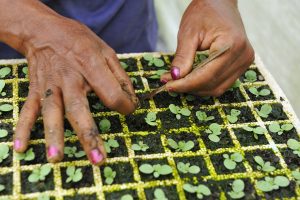
Virginia is one of the most widely grown and widely used tobaccos in the world. It is prized for its natural brightness and relatively high natural sugar content, which contributes a mild, slightly sweet character to a blend without the addition of artificial flavoring. When cured properly, Virginia leaf brings a pleasant aroma and a certain lightness to the draw that makes it versatile across cigar, cigarillo, and pipe tobacco formats.
In a blend, Virginia tends to serve as a foundation. It provides body and a clean base that other tobaccos can build on. Its natural sweetness helps balance stronger or more complex varieties, which is why it shows up in so many quality tobacco products across different categories.
Oriental Tobacco
Oriental tobacco, sometimes called Turkish tobacco, is a small-leafed variety that originated in the eastern Mediterranean, parts of the Middle East, and into South Asia. It is sun-cured, which concentrates its natural oils and results in a distinctly aromatic character. The flavor contribution of Oriental leaf is subtle and complex at the same time. It adds spice, depth, and a kind of aromatic richness that other varietys do not replicate.
It is not a dominant note in most blends. Oriental leaf tends to work best in smaller proportions, providing nuance and complexity rather than the primary flavor experience. Blenders who know how to use it well create products that have a layered, interesting character without any single element overwhelming the others.
Tropical and Broadleaf Tobaccos
Tropical varieties cover a range of tobaccos that originate closer to the equator, across Central America, the Caribbean, and parts of South America and Southeast Asia. These regions produce leaves with their own distinct character shaped by climate, soil composition, and curing methods specific to each growing region.
What tropical tobaccos typically bring to a blend is roundness. A kind of fullness and warmth in the flavor profile that complements both the brightness of Virginia and the aromatic complexity of Oriental leaf. Some tropical varieties also produce excellent wrapper leaves, with a natural sheen and consistency that makes them well-suited to the outer layer of a cigar or cigarillo.
When Virginia, Oriental, and tropical tobaccos are blended together by someone who understands how they interact into a uniquely American blend, the result is a smoke with real depth. Not overpowering, not one-dimensional, but layered and balanced in a way that holds your attention from the first draw to the last.

The Farm: Why Where and How Tobacco Is Grown Matters
Terroir is a concept most people associate with wine, but it applies just as directly to tobacco. The soil composition, the altitude, the rainfall patterns, the temperature range across the growing season, all of these factors influence the character of the leaf that comes off the plant. Two fields planted with the same variety in different regions can produce leaf with noticeably different flavor profiles. The geography is not background noise. It is an active ingredient. Many say that Brazil has one of the best terroir for tobacco growing.
Soil and Climate
Premium tobacco tends to come from regions where the soil has the right mineral composition and drainage to develop leaf with density and character. Compacted, nutrient-poor soil produces thin, inconsistent leaf. Rich, well-drained soil with the right mineral balance develops leaf that cures well and holds its flavor through the blending and manufacturing process.
Climate plays an equally important role. Tobacco grown in regions with distinct wet and dry seasons tends to develop more complex flavor than leaf grown in conditions that are uniformly moderate. Stress during the growing season, within certain limits, encourages the plant to develop more concentrated oils and sugars. Too much stress and you get a damaged crop. The right amount and you get leaf with real character.
Growing and Harvesting Practices
How the crop is tended from seedling through harvest has a direct effect on quality. Premium tobacco farming involves careful monitoring of the plant through each growth stage, selective harvesting of individual leaves as they reach optimal maturity, and attention to the condition of the crop that is not possible at industrial scale without compromising the final product.
Leaves are not all ready at the same time. The lower leaves on a tobacco plant mature earlier than the upper leaves, and each position on the plant produces leaf with a different character. The lower priming is typically lighter and milder. The upper leaves are denser and stronger. A thoughtful blend uses leaves from different positions to achieve a specific flavor target, which means the farming and harvesting process has to be precise enough to separate and track those distinctions.
Brands that farm their own tobacco have a built-in advantage here. When the farming operation is controlled by the same organization that makes the final product, quality standards can be maintained throughout the supply chain rather than negotiated at the point of purchase. The difference shows up in the consistency and character of what ends up in your hand.
Curing: The Process That Unlocks Flavor
Once harvested, tobacco leaf goes through a curing process that fundamentally changes its chemical composition. Raw tobacco is high in chlorophyll and sugars in forms that do not translate well to the finished product. Curing converts those compounds, reduces moisture to the right level, and begins developing the flavor and aroma characteristics that will define the leaf in a blend.
Air Curing
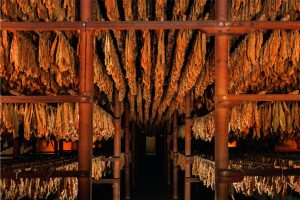
Air curing hangs harvested tobacco in well-ventilated barns and allows natural airflow to slowly draw down moisture over a period of several weeks. The process is slow and requires consistent conditions to produce uniform results. Air-cured leaf tends to be lower in sugar content and produces a relatively mild, slightly earthy character. Many cigar and cigarillo tobaccos, particularly those used for filler and binder, go through some form of air curing.
Sun Curing
Sun curing is primarily associated with Oriental tobaccos. The leaves are laid out directly under sunlight, which concentrates their natural oils and creates the aromatic intensity that Oriental leaf is known for. The process requires consistent sun exposure over an extended period and produces a leaf that is noticeably more aromatic and complex than air-cured equivalents. The concentrated oils developed through sun curing are a significant part of what makes well-blended cigarillos and small cigars smell the way they do when lit.
Fermentation and Aging
After initial curing, premium tobacco leaf typically goes through a fermentation stage and, in many cases, an extended aging period before it enters production. Fermentation in tobacco involves stacking baled leaf in pilones, large piles that generate internal heat through natural biological activity. This process continues to transform the chemical compounds in the leaf, reducing harshness and developing flavor complexity in ways that curing alone cannot achieve.
Aging takes this further. Leaf that is held in controlled conditions for months or years before being blended and rolled develops a depth and character that younger tobacco simply does not have. The time investment in aging is one of the clearer dividing lines between premium tobacco products and mass-produced ones. It is not a process you can shortcut and achieve the same result.
The Wrapper Leaf: The Most Expressive Part of the Product
In a cigar or cigarillo, the wrapper is the outermost leaf. It is what you see, what you touch, and what contributes significantly to the aroma and a meaningful portion of the overall flavor profile of the smoke. Premium wrapper leaf is among the most carefully grown and selected tobacco in the world.
A quality wrapper leaf needs to be consistent in color, free of major veins and blemishes, have the right tensile strength to wrap evenly without cracking, and carry enough natural oil content to burn consistently and contribute positively to the aroma. Achieving all of those qualities simultaneously requires excellent growing conditions, precise harvesting, and careful handling throughout the curing and aging process.
Natural leaf wrappers, as opposed to reconstituted or homogenized tobacco sheet, are the standard for premium cigar and cigarillo products. Reconstituted sheet is made from tobacco byproducts processed into a uniform material. It is consistent and inexpensive to produce, but it does not carry the same flavor complexity or aromatic character as whole leaf. The wrapper is where you can often tell, without much difficulty, whether a product was made with real attention to quality or built for efficiency.
How the Wrapper Affects the Burn and Draw
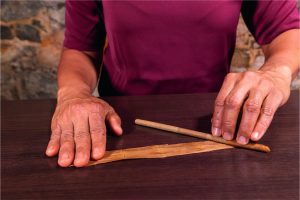
Beyond flavor, the wrapper leaf has a practical effect on how a cigarillo or cigar burns. Natural leaf that has been properly cured and aged burns evenly from start to finish. It holds together without unraveling, maintains a consistent draw throughout, and contributes to the overall experience rather than fighting against it. When the wrapper is doing its job well, you notice it in the consistency of each draw. When it is not, you notice it in runs, uneven burns, and a draw that tightens or loosens unpredictably.
The silkiness of a well-made natural leaf wrapper is also something experienced smokers recognize immediately. It is a tactile indicator of the care that went into producing the leaf, and it correlates with what you experience once the product is lit.
The Blend: Where Science and Craft Come Together
Growing quality tobacco and curing it well are necessary conditions for a premium product, but they are not sufficient on their own. The blend determines whether the individual components add up to something greater than the sum of their parts or whether they simply coexist without much purpose.
A master blender works with tobacco varietys the way a chef works with ingredients. Each component brings something specific. The Virginia brings brightness. The Oriental adds aromatic complexity and subtle spice. The tropical leaf rounds the blend out with warmth and fullness. Getting the proportions right to hit a specific flavor target, a mellow and aromatic profile, a rich and full-bodied one, a balanced natural tobacco character without any single note dominating, is the skill that separates a thoughtfully made product from one that was constructed to a cost target.
The best blends have a coherence to them. An American blend is one of the best. The draw is consistent from the moment you light the product through to the end. The aroma and flavor develop in a predictable, pleasant way rather than shifting or fading quickly. A well-constructed blend holds together.
A Brand That Takes These Things Seriously: Al Capone Cigarillos
Most of what has been covered in this piece does not happen by accident. It requires intentional decisions at every stage of the supply chain, from where the tobacco is grown and how the farms are managed, through curing, aging, blending, and final production. Brands that take those decisions seriously produce products that reflect it. Brands that do not, produce products that reflect that too.
Al Capone cigarillos are built on a foundation that takes the source of the tobacco seriously. The tobacco used in their products comes from their own farms in Brazil, which means the quality standards that matter to the finished product are maintained through the entire growing and harvesting process rather than left to a third-party supplier. That kind of vertical integration is not common at the cigarillo price point, and it shows in what the products actually deliver.
The wrapper leaf is produced in-house as well. The natural leaf wrappers used across Al Capone’s lineup are not outsourced to whoever offers the best per-unit cost. They are controlled as part of the same operation, which means the silky, consistent quality that a natural wrapper is supposed to provide actually shows up in the product rather than just in the marketing copy.
Al Capone Blues: A Study in Natural Tobacco Character
The Blues line is probably the clearest example of what a well-constructed natural tobacco cigarillo can be when the underlying ingredients are taken seriously. The blend inside draws on three distinct variety contributions: Virginia for brightness and natural character, Oriental for aromatic depth and subtle complexity, and Tropical tobacco for the warmth and roundness that ties the blend together.
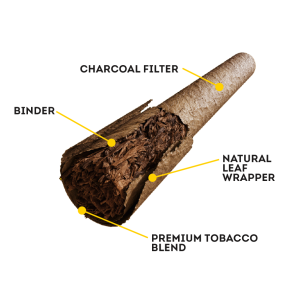 There are no added flavors in Blues. What you experience is entirely the product of the tobacco itself, which means the quality of the leaf and the skill of the blend carry the entire experience. That is a more demanding standard to meet than a flavored product, where added sweetness or aroma can compensate for shortcomings in the underlying tobacco. Blues works without that safety net, and the result is a mellow, aromatic smoke that has real character without asking anything complicated from the person enjoying it.
The wrapper is a natural silky leaf produced by the brand in-house. The burn is consistent. The draw is even throughout. The aroma is present from the moment you light it and stays that way rather than dropping off halfway through. These are qualities that reflect the process described earlier in this piece. They do not happen by accident.
The Blues also comes in a filtered version for smokers who prefer that format, offering the same tobacco foundation with a slightly different experience. Both versions are built on the same quality of leaf and the same blend, so the choice between them comes down to personal preference rather than one being a lesser version of the other.
If you want to experience what a naturally aromatic cigarillo built on quality tobacco actually tastes like, the Blues line is the place to start. Find Al Capone Blues near you
For the filtered version of the same blend, Blues Filter is available here.
How to Evaluate Any Premium Tobacco Product
Armed with the context from the earlier sections of this piece, evaluating whether a tobacco product is genuinely premium or just marketed that way becomes more straightforward. There are a few practical questions worth asking.
Where Does the Tobacco Come From?
Brands that know their tobacco and take it seriously can usually tell you something specific about where it is grown. Vague answers, or no answer at all, tend to indicate that sourcing is a cost decision rather than a quality one. Brands that farm their own tobacco or maintain close relationships with specific growing regions have made a deliberate investment in the source of their product. That investment usually shows up in the consistency and character of what they produce.
What Is the Wrapper?
Natural leaf wrapper versus reconstituted sheet is one of the clearest quality indicators in the cigar and cigarillo category. If the product uses a natural tobacco leaf wrapper, and especially if that wrapper is produced by the brand rather than purchased from a commodity supplier, you are looking at a product that has prioritized the quality of the outermost component rather than economized on it. The burn, the aroma, and the feel of the product in your hand will reflect that choice.
Does the Blend Hold Together?
A well-constructed blend reveals itself in use. The draw should be consistent. The aroma should develop and hold rather than fading quickly after the initial light. The flavor character, whatever profile the blend is designed around, should be present throughout the smoke rather than front-loading intensity and then dropping off. If a product burns well, draws evenly, and delivers a consistent experience from start to finish, the underlying blend is probably doing its job.
Final Thoughts
Premium tobacco is not a mystery. It is the result of specific decisions made at every stage of a long and demanding process. The variety selection. The farming and harvesting practices. The curing method. The fermentation and aging time. The quality and origin of the wrapper leaf. The craft of the blend. Each element either contributes to a genuinely superior experience or it does not.
For adult smokers who want to understand what they are putting in their rotation and why some products deliver a noticeably better experience than others, those are the things worth paying attention to. The label tells you what a brand wants you to think. The process tells you what they actually believe.
Al Capone cigarillos, and the Blues line in particular, reflect the kind of commitment to sourcing and process that the premium label is supposed to represent. Natural leaf. Tobacco from their own farms in Brazil. A blend built on three distinct variety contributions that work together rather than just occupying the same wrapper. It is a product that earns the description through what goes into it.
Find a retailer near you and see what that foundation actually tastes like.
Find Al Capone cigarillos at a store near you: Store Locator
Prefer to shop online? Browse Online Retailers
This content is intended for adult consumers 21 years of age or older. This article is informational in nature and does not constitute medical or health advice.