

Tobacco farming gets less attention than it deserves. Most people who enjoy a cigarillo never think about the field the leaf came from. They never think about the soil, the rainfall, the cure barn, or the people who walked the rows. They think about the smoke.
That is fair. A finished product should speak for itself. But once you know how tobacco is grown, the smoke means a little more. You start to taste decisions. You start to notice what good farming actually does.
This is a guide to how it all works, written for anyone who has ever wondered what happens between the seed and the finished cigarillo.
Where Tobacco Grows Best
Tobacco is a stubborn plant. It grows in many parts of the world. It does not grow well everywhere. The best tobacco-growing regions share a few things. Long, warm summers. Steady rainfall during the early growing season. Dry, sunny stretches close to harvest. Soil that drains well without going to dust.
These conditions exist in pockets across multiple continents. Cuba is famous for them. So is the Connecticut River Valley. So is Sumatra. So is Brazil. The broader history of tobacco cultivation covers how the crop spread across these growing regions over centuries.
Brazil deserves more credit than it usually gets in the conversation. Its southern growing regions sit at latitudes that match some of the most respected tobacco land in the world. The soil is rich. The climate is dependable. Rainfall and sunshine fall in patterns that suit tobacco well. Brazilian leaf has been quietly used in premium blends across the global cigar industry for decades, sometimes credited and sometimes not.
The Three Workhorse Varieties
Some cigarillo and cigar tobacco starts with one of three traditional varieties. Each comes from a different agricultural tradition. Each plays a different role in a finished blend.
Virginia tobacco originated in the American South. The name comes from the colony where it was first cultivated commercially. Today Virginia tobacco is grown around the world, including in Brazil. It cures bright and yellow. The flavor leans naturally sweet and aromatic.
Burley tobacco took shape in Kentucky. It is air-cured rather than flue-cured, which gives it a different chemistry. The leaf turns brown during the cure. The flavor is fuller, nuttier, and slightly drier than Virginia.
Oriental tobacco gets its name from the regions around the eastern Mediterranean where it was first developed. Today Oriental tobacco is cultivated in many parts of the world, again including Brazil. The leaves are smaller and more aromatic, with a layered, almost spicy character.
When these three varieties are blended together, the result is called an American Blend. Each variety contributes something the others cannot. Virginia brings the sweetness. Burley brings the body. Oriental brings the aroma. The blend is the foundation of a huge portion of the world’s cigarette and cigarillo production.
From Seed to Field
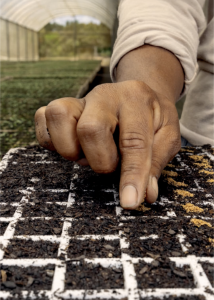
A tobacco crop starts long before the field is ready. Seeds are tiny, smaller than a grain of sand. They have to be started in a controlled seedbed. Seedlings spend weeks in trays before they are strong enough to transplant.
Transplanting is its own moment. The young plants leave the protected seedbed and go into open ground. If the timing is wrong, they will not take root. If the weather turns the wrong way that week, the whole crop can be set back a month. Good growers watch the calendar, the soil, and the sky every single day during this stretch.
Once the seedlings go into the field, the work shifts to managing growth. Tobacco is a hungry plant. It pulls a great deal from the soil, especially nitrogen and potassium. Good farmers know their fields the way good chefs know their pantry. They know which rows are rich, which are tired, which need rest, and which need a different rotation crop next year.
Pests are constant. So are storms. So is weather that does not cooperate. Skilled farming is mostly the discipline of watching closely and making small decisions every day for months.
Toward the end of the growing season, growers face one of the most important calls of the year. When to top the plant. Topping means removing the flowering head. It pushes the plant’s energy into the leaves rather than into seed production. The result is fewer leaves, but better leaves. Done well, topping is one of the differences between average tobacco and quality tobacco.
Harvest Without Shortcuts
Tobacco harvest is not a one-day event. The leaves on a single plant ripen at different rates, from the ground up. The bottom leaves go first. The middle leaves a few weeks later. The top leaves last, when they are richest and most concentrated.
Premium farms harvest leaf by leaf, by hand. Each leaf is picked at the peak of its readiness, then carried to the cure barn the same day. Lower-grade operations strip whole plants at once. The yield is higher but the quality is lower. Some leaves come off too early. Some come off too late. The flavor flattens across the lot.
When you taste the difference between a thoughtful cigarillo and a cheap one, a lot of it traces back to this one decision. Was the leaf picked at its moment, or was it picked when it was convenient?
The Cure Is Where the Flavor Comes From
Fresh tobacco leaves do not taste like tobacco. They are green, grassy, and sharp. The flavor most smokers love is built during the cure.
There are several main ways to cure tobacco. Flue-curing uses heat from external pipes to drive moisture out quickly. It locks in sugars and produces a bright, naturally sweet leaf. This is how most Virginia tobacco is cured.
Air-curing happens in open barns over weeks or months. Air moves through, the leaves slowly turn brown, and the chemistry shifts toward fuller, drier flavors. This is the traditional method for Burley.
Sun-curing is closer to how Oriental varieties were cured for centuries. The leaves dry under the sun, sometimes hung in long strings. The result is a more aromatic, lighter leaf.
After the cure, leaves rest. Aging is its own art. Tobacco that has been allowed to age develops mellower, more rounded character. Rushing this stage shows up in the smoke.
Aging tobacco is closer to aging wine or whiskey than most people realize. Time changes the leaf. Sharp notes settle. Harshness fades. Layered character builds. Cheap product gets pushed through. Premium product gets time. It is one of the simplest differences in the industry and one of the most expensive to honor.
Labor Still Matters
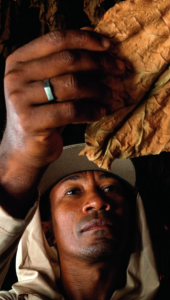
A real tobacco operation is not a button you press. It is people. Farmers, field hands, leaf graders, cure barn operators, blenders, rollers. Each step relies on someone who knows what they are doing.
Hand harvesting takes practice. So does grading. A good grader can sort hundreds of leaves an hour by texture, color, size, and quality. The leaves that go into a premium product are not the same as the leaves that go into bulk processing. Someone has to make that call, by hand, leaf by leaf.
When you read that a cigarillo is hand-rolled, that means another set of trained hands at the end of the chain. Someone who knows how to lay the filler. Someone who knows how to wrap the leaf so the burn is even. The same logic that applies to growing the tobacco applies to finishing it.
How Farming Decisions End Up in the Smoke
Every step described above leaves a fingerprint on the final product. Soil quality affects body. Variety affects character. Topping affects concentration. Picking time affects balance. Curing affects everything from flavor to aroma to burn.
This is why tobacco farming is not a commodity exercise at the high end. The farms that take care all the way through produce leaf that is fundamentally different from leaf grown for volume alone. Even the same variety, grown in the same country, will taste different from one operation to the next.
Why Brazil Is a Strong Tobacco Country
Brazil has been growing tobacco for centuries. Conditions in the southern part of the country are particularly suited to the crop. Latitude. Elevation. Soil composition. Rainfall patterns. There is a reason much of the world’s premium cigar industry uses Brazilian leaf, even if the country does not get the marketing it deserves.
Working tobacco in Brazil also has a practical benefit for any operation that wants to control the entire process. Land can be managed across multiple variety needs. Cure barns can be built where the climate supports them. Aging can happen on site rather than in a third-party warehouse halfway around the world.
What Vertical Farming Looks Like in Practice
Most cigarillo brands buy their tobacco. They source from auction floors, brokers, or contracted growers. The leaf in the finished product is a step removed from the company that put its name on the box. There is nothing automatically wrong with that, but it does mean the brand is at the mercy of whatever the market produced that year.
A smaller number of brands grow what they sell. Al Capone is one of those. The tobacco for the cigarillo lines is grown on their own farms in Brazil, from the seed through the cure. Virginia, Burley, and Oriental varieties are cultivated on the same land they will be blended on. The American Blend in the Blues line comes together with the leaf still close to where it was raised. The Sweets and Jamaican Blaze lines are hand-rolled with leaf from the same farms.
That kind of vertical setup is rare in the cigarillo space. It is also a real advantage when consistency matters. The farm and the factory are not arguing over what was promised six months ago. They are the same operation.
What This Looks Like in a Finished Cigarillo
When good farming meets good blending, you can taste it. The flavor is more even. The burn is more reliable. The aroma is more layered. There is less harshness because the leaf was grown and cured properly, not rushed.
A well-farmed cigarillo also holds up better. The leaf has structure built into it from the field forward. It does not dry out as fast. It does not turn flat as easily. It behaves the way good tobacco is supposed to behave.
For most smokers, none of this is something you need to think about consciously. You feel it before you can explain it. The flavor is mellow. The character is balanced. The cigarillo feels right.
Premium Tobacco Versus Premium Marketing
There is a lot of marketing around tobacco. Some of it is honest. Some of it is theater. The real markers of premium tobacco are not gold foil packaging or auction-house origin stories. The real markers are the decisions made in the field and in the cure barn.
A brand that controls its own farms can stand behind its tobacco. A brand that buys leaf on the open market is at the mercy of whoever happened to be selling that month. There is a place for both, but you are tasting different things.
The Takeaway
Tobacco farming is where everything starts. Climate, soil, variety, topping, picking, curing, aging. Each of these decisions is silent in the final product, but they all show up in the smoke. The farms doing it well are the ones paying attention from seed to barn.
If you want to taste what good farming feels like in a cigarillo, the easiest place to start is with a brand that grows its own. Al Capone grows the tobacco for its cigarillos on their own farms in Brazil. The Blues line is an American Blend of Virginia, Oriental, and Burley grown on that land. The Sweets and Jamaican Blaze lines are hand-rolled with leaf from the same farms. The result is the kind of consistency you only get when the people making the cigarillo are also the people growing the leaf.
Where to Try It
You can find Al Capone cigarillos at retailers across the country through the store locator, or pick up a pack through online retailers. Whichever you choose, the leaf in your hand started in the same field.
This content is intended for adult consumers 21 years of age or older. This article is informational in nature and does not constitute medical or health advice. Preferences vary depending on taste and experience.